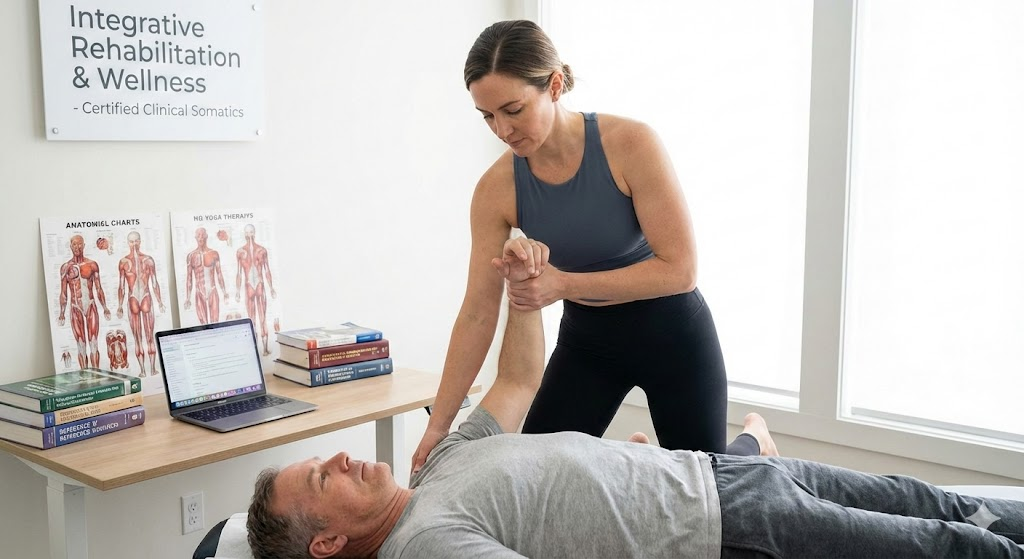
As an independent yoga teacher or Licensed Massage Therapist (LMT) in North America, you have likely encountered them: the "frequent corrector" who questions every cue, the student recovering from a herniated disc who is terrified to move, or the "weekend warrior" who constantly pushes past their physical limits despite your warnings.
In a high-churn industry, these aren't just "difficult" clients; they are growth opportunities. When you handle a high-stakes recovery or a complex personality with clinical precision, you stop being just an "instructor" and start being a vital part of their long-term wellness team.
Here is how to navigate the technical and interpersonal layers of teaching challenging students in 2026 without losing your cool.
1. The Pre-Session "Audit": Beyond the Basic Waiver
Standard liability waivers are for your legal protection, but they don't help your session flow. For recovery students, you need a Functional Baseline.
Before they step on the mat or table, ask these three targeted questions to establish authority:
- "On a scale of 1–10, what is your pain level right now, and does it radiate?"
- "What specific daily movement (e.g., reaching for a seatbelt, walking downstairs) is currently restricted?"
- "What are the specific 'Red Light' movements your physical therapist or doctor explicitly told you to avoid?"
The Professional Edge: Instead of relying on memory or messy paper files that get lost, use a tool like FlowKit to log these specific responses in the student's digital profile. Having a "historical injury log" at your fingertips allows you to show them objective progress over months—this is a massive retention booster when a student feels like they "aren't getting better."
2. Communication Scripts for High-Maintenance Personalities
Managing the "Ego" student or the "Anxious" student requires specific verbal cues. Use these scripts to maintain control of the room without sacrificing empathy.
Scenario A: The Student Pushing Too Hard (The "Ego" Student)
- The Problem: They ignore pain signals to keep up with the class or their former self.
- The Script: "I love that drive, [Name], but today our objective is 'Neuromuscular Re-education.' If we push into that 7/10 pain range, your nervous system will trigger a protective guarding response, which actually tightens the muscles we’re trying to release. Let’s stay at 40% effort to trick the body into healing."
Scenario B: The "Backseat Teacher" (The Interrupter)
- The Problem: They interrupt to suggest a different pose or correct your instruction based on a different lineage.
- The Script: "That’s an interesting perspective from that style of practice! However, the sequence I’ve designed for today is specifically focused on [Anatomical Goal, e.g., Pelvic Stability]. To get the results we’re looking for, let’s follow this specific protocol today, and I’m happy to chat about other variations for 5 minutes after class."
3. Intelligent Sequencing: The "Modular" Approach
When teaching recovery or mixed-level groups, your sequence must be adaptable in real-time. You shouldn't be "winging it."
- The Baseline + Branch Method: Plan your "Peak Pose," then immediately strip it down to two regressions (e.g., from Warrior II to Seated Lateral Stretch).
- Visual Documentation: Use FlowKit’s sequencing dashboard to tag specific poses as "Herniated Disc Safe" or "Rotator Cuff Friendly." If a student shows up with a sudden flare-up, you can filter your saved sequences in seconds to pivot the class plan without breaking a sweat.
4. Setting Professional Boundaries
Burnout happens when "difficult" students leak into your personal time.
- The Consultation Cap: Explicitly state to high-needs students: "Post-class clinical questions are limited to 5 minutes so I can reset for the next client." For deeper dives, suggest a paid 15-minute "Virtual Alignment Consultation."
- Automate the Admin: Don't text back and forth about rescheduling or injuries. Direct all clients to a centralized portal. This positions you as a business professional, not just a "gig worker."
The Bottom Line: You aren't just teaching poses; you are managing human psychology. By using precise scripts and professional tools like FlowKit to track student data, you transform "difficult" sessions into a structured, clinical, and high-value service that justifies premium pricing.